
At Greenstaff HomeCare Canada, we see the dedication of caregivers every day. However, the latest Caring in Canada 2026 report reveals a sobering reality: Canada’s 8 million+ caregivers are reaching a breaking point.
The 2025 National Caregiving Survey, conducted by Leger Communications with over 2,600 participants, highlights that the affordability crisis and political inaction are leaving families and care providers more vulnerable than ever before.
Data: A System Under Pressure
The report highlights significant hurdles that align with what many of our clients and staff experience in provinces like BC and Ontario:
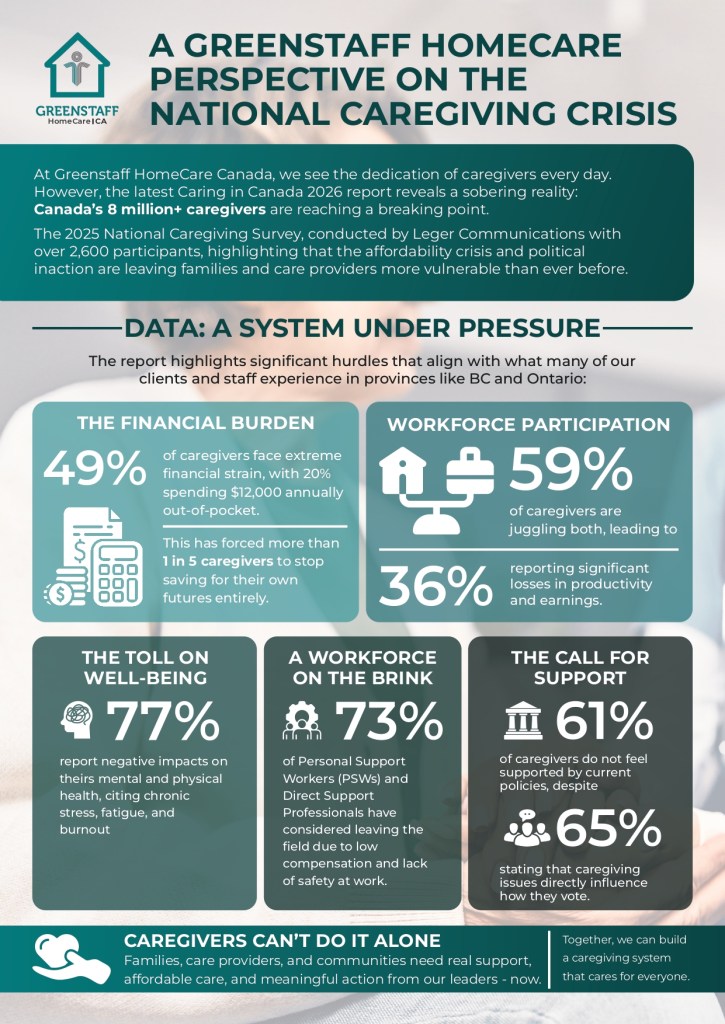
- The Financial Burden: Caregiving is no longer just an emotional commitment; it’s a financial one. 49% of caregivers face extreme financial strain, with 20% spending over $12,000 annually out-of-pocket. This has forced more than one in five caregivers to stop saving for their own futures entirely.
- Workforce Participation: Balancing a career with care is becoming nearly impossible. 59% of caregivers are juggling both, leading to 36% reporting significant losses in productivity and earnings.
- The Toll on Well-being: Emotional burnout is at an all-time high. 77% report negative impacts on their mental and physical health, citing chronic stress, fatigue, and burnout.
- A Workforce on the Brink: The crisis extends to paid providers. 73% of Personal Support Workers (PSWs) and Direct Support Professionals have considered leaving the field due to low compensation and lack of safety at work.
- The Call for Support: There is a massive gap in government trust. 61% of caregivers do not feel supported by current policies, despite 65% stating that caregiving issues directly influence how they vote.
How Greenstaff Supports You: Navigating the Journey
In the face of these challenges, you don’t have to manage alone. We understand that the healthcare system can be overwhelming and complex. Our Case Managers can help families navigate the caregiving journey, providing expert guidance on care plans, resource allocation, and provincial support systems to ensure your loved one gets the best care while protecting your own well-being.
Our Commitment to Equity
The 2026 report specifically highlights the unique challenges faced by equity-seeking groups. At Greenstaff, we acknowledge the data regarding Indigenous caregivers, as well as insights from racialized, LGBTQ2S+, and young caregivers. We believe that care must be culturally safe and inclusive to be truly effective.
Why This Matters to Greenstaff HomeCare
As a leading home care provider in Canada, Greenstaff HomeCare remains committed to:
- Providing Respite: Giving family caregivers the break they need to protect their well-being.
- Supporting our PSWs: Ensuring our care providers are valued so they can provide the best care possible.
- Advocacy: Standing with Canadian families to demand better resources for “invisible” work.
Caring for a loved one shouldn’t mean sacrificing your own future.
A Greenstaff HomeCare Perspective on the National Caregiving Crisis
At Greenstaff HomeCare Canada, we see the dedication of caregivers every day. However, the latest Caring in Canada 2026 report reveals a sobering reality: Canada’s 8 million+ caregivers are reaching a breaking point.
The 2025 National Caregiving Survey, conducted by Leger Communications with over 2,600 participants, highlights that the affordability crisis and political inaction are leaving families and care providers more vulnerable than ever before.
Data: A System Under Pressure
The report highlights significant hurdles that align with what many of our clients and staff experience in provinces like BC and Ontario:
- The Financial Burden: Caregiving is no longer just an emotional commitment; it’s a financial one. 49% of caregivers face extreme financial strain, with 20% spending over $12,000 annually out-of-pocket. This has forced more than one in five caregivers to stop saving for their own futures entirely.
- Workforce Participation: Balancing a career with care is becoming nearly impossible. 59% of caregivers are juggling both, leading to 36% reporting significant losses in productivity and earnings.
- The Toll on Well-being: Emotional burnout is at an all-time high. 77% report negative impacts on their mental and physical health, citing chronic stress, fatigue, and burnout.
- A Workforce on the Brink: The crisis extends to paid providers. 73% of Personal Support Workers (PSWs) and Direct Support Professionals have considered leaving the field due to low compensation and lack of safety at work.
- The Call for Support: There is a massive gap in government trust. 61% of caregivers do not feel supported by current policies, despite 65% stating that caregiving issues directly influence how they vote.
How Greenstaff Supports You: Navigating the Journey
In the face of these challenges, you don’t have to manage alone. We understand that the healthcare system can be overwhelming and complex. Our Case Managers can help families navigate the caregiving journey, providing expert guidance on care plans, resource allocation, and provincial support systems to ensure your loved one gets the best care while protecting your own well-being.
Our Commitment to Equity
The 2026 report specifically highlights the unique challenges faced by equity-seeking groups. At Greenstaff, we acknowledge the data regarding Indigenous caregivers, as well as insights from racialized, LGBTQ2S+, and young caregivers. We believe that care must be culturally safe and inclusive to be truly effective.
Why This Matters to Greenstaff HomeCare
As a leading home care provider in Canada, Greenstaff HomeCare remains committed to:
- Providing Respite: Giving family caregivers the break they need to protect their well-being.
- Supporting our PSWs: Ensuring our care providers are valued so they can provide the best care possible.
- Advocacy: Standing with Canadian families to demand better resources for “invisible” work.
Caring for a loved one shouldn’t mean sacrificing your own future.
Source: Report: Caring in Canada – Canadian Centre for Caregiving Excellence
 Greenstaff Homecare Canada
Leave a comment